order by 5pm for same-day delivery within Klang Valley and Selangor!

Share this post:
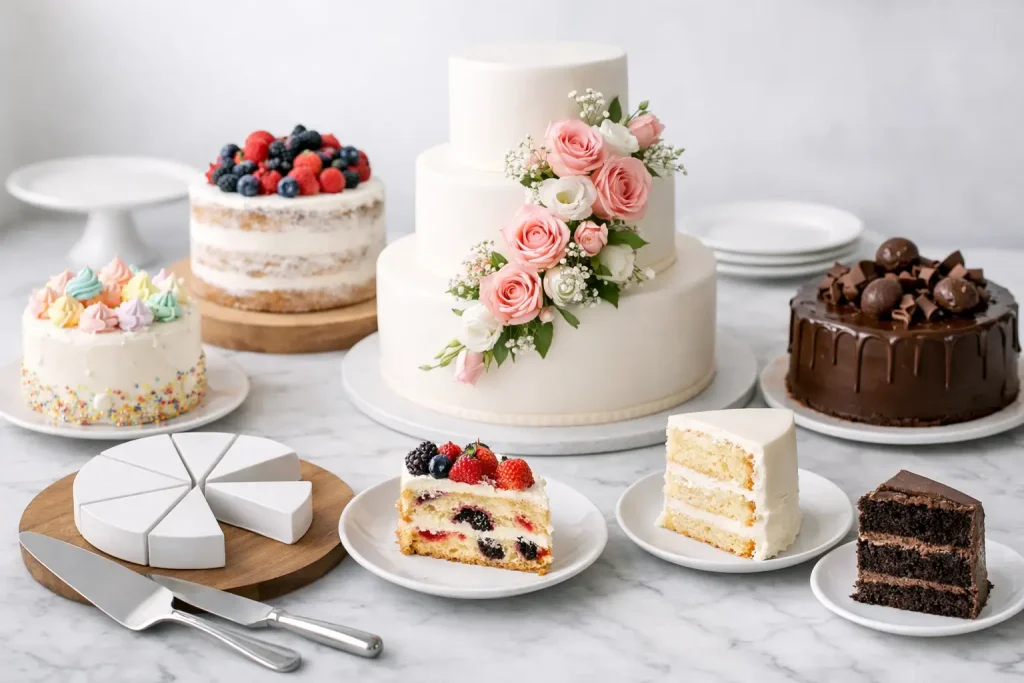
The candle count is easy. The tricky part is choosing a cake that feels generous without leaving you with half a dessert in the refrigerator. This guide to celebration cake sizes helps you match the cake to the guest list, the occasion, and the way people are likely to serve themselves.
A small family birthday may call for a beautiful six-inch cake with a flavor everyone loves. A school party, office gathering, or milestone celebration usually needs more room for seconds, plus a little buffer for unexpected guests. The right size is not just about avoiding waste – it is about making sure every guest gets a sweet moment worth celebrating.
Cake dimensions are useful, but servings are the number that matters most. A bakery’s serving guide generally assumes modest celebration slices, especially when cake is served after a meal alongside coffee, fruit, or other desserts. If cake is the main attraction, or your guests are enthusiastic dessert lovers, plan for slightly larger portions.
For most round layer cakes, this is a practical starting point:
| Cake size | Typical servings | Best for | |—|—:|—| | 4-inch round | 2-4 | An intimate dinner, a couple, or a small surprise | | 6-inch round | 6-10 | Small family birthdays and thoughtful gifts | | 8-inch round | 12-16 | Family celebrations and casual gatherings | | 9-inch round | 16-20 | Larger dinners, school events, and team celebrations | | 10-inch round | 20-28 | Office parties and bigger birthday gatherings | | 12-inch round | 30-40 | Large events, open houses, and milestone parties |
These ranges can shift depending on the cake’s height and how it is cut. A tall, generously layered cake may give you more portions than a single-layer cake of the same diameter. A rich flourless chocolate cake or cheesecake is also commonly served in smaller slices because it is more filling than a light sponge cake with fresh cream.
Start with the number of people you truly expect, not the number you invited. Then add about 10 to 15 percent when your gathering is casual, children are attending, or guests may bring someone along. For a party of 15, an eight-inch cake may work if other desserts are available and portions are modest. If it is the only dessert, a nine-inch cake gives you a more comfortable margin.
This cushion is especially helpful for workplace celebrations. Colleagues may stop by after the first round of cake has been served, and a few extra slices can turn a simple birthday moment into a shared treat. For a child’s party, consider whether parents and siblings will be eating too. The guest list can grow faster than expected once the cake is on the table.
There is one exception: a very formal plated dinner. When the menu includes several courses and cake arrives as a final course, you can generally follow standard serving estimates more closely. Guests are less likely to ask for a second slice, and smaller portions often feel just right.
For 6 to 10 guests, choose a six-inch cake. For 12 to 16 guests, an eight-inch cake is a dependable choice. For 18 to 20 guests, move up to a nine-inch cake, and for 20 to 28 guests, a 10-inch cake is usually the safer bet. If you are serving 30 or more people, a 12-inch cake or two smaller cakes gives you better coverage.
Two cakes can be a lovely choice when your group includes different tastes or dietary preferences. Pair a classic chocolate cake with a lighter fruit-forward option, or choose one vegan or flourless cake alongside a traditional cream cake. It also makes the dessert table look more abundant without requiring a towering centerpiece.
A cake for a birthday at home does not need the same strategy as a cake for a retirement party. The setting affects how people eat, how long the event lasts, and whether the cake needs to create a visual centerpiece.
For an intimate birthday, a smaller cake feels personal and polished. A six-inch cake can still look impressive when it is finished with elegant piping, fresh fruit, a favorite message, or colorful candles. It is also a smart option for sending a surprise to someone’s home, particularly when you want the gift to be fresh, beautiful, and easy to enjoy over a day or two.
For family gatherings, an eight-inch or nine-inch cake often hits the sweet spot. It gives grandparents, cousins, and friends enough to share while still fitting comfortably on the table. If your family tends to linger over dessert, choose a flavor with broad appeal, such as chocolate, vanilla, strawberry, or a balanced cream cake that is not overly sweet.
For office birthdays, consider the time of day. A mid-afternoon cake break can bring in more guests than the RSVP list suggests. A 10-inch cake is a comfortable choice for a department-sized group, while two six-inch or eight-inch cakes make serving easier across different teams. Separate cakes also let you offer more than one flavor, which is always a thoughtful touch.
For milestone celebrations such as anniversaries, graduations, baby showers, and engagement parties, presentation may matter as much as portion count. A larger cake creates a lovely focal point, but it is not the only answer. A medium-sized celebration cake surrounded by cupcakes, cookies, or tarts can look festive and make serving more flexible.
Round cakes are popular because they look elegant and suit almost every celebration. Their servings are estimated from the diameter, which is why moving from an eight-inch to a 10-inch cake creates a more significant increase than it may appear. Those extra inches add considerably more surface area.
Sheet cakes and rectangular cakes are often more efficient for large groups. They are easier to portion into consistent squares and can be a practical choice for classrooms, offices, and community events. If serving speed matters, a rectangular format can save time and reduce the guesswork at the dessert table.
Height is another detail worth asking about. A tall cake with several layers can be sliced thinner and still feel generous. A shorter cake may need wider slices to deliver the same satisfying bite. If you are ordering online, review the product description for diameter, height, and stated servings rather than relying on photos alone.
The richer the cake, the smaller the portion can be. Dense cheesecakes, chocolate truffle cakes, and flourless cakes are wonderfully indulgent, but many guests will be happy with a slimmer slice. Light pandan, vanilla, citrus, or whipped-cream cakes often invite larger servings, especially at warm-weather gatherings.
Think about what else is on the menu. After a hearty dinner, cake portions naturally shrink. At a tea party or afternoon event where dessert is the focus, people tend to eat more. If you are serving cupcakes, cookies, ice cream, or a dessert bar, you can choose a smaller centerpiece cake. If the cake is the one special treat, give it room to shine with enough slices for everyone.
Leftovers are not a failure, either. A few extra slices mean the birthday person can enjoy the celebration again the next day, or guests can take home a sweet favor. The goal is not to calculate with absolute precision. It is to avoid the disappointment of cutting the last slice before everyone has been served.
Before guests arrive, make space in the refrigerator and decide who will cut the cake. Use a long, sharp knife and wipe it clean between cuts for neat slices. For tall round cakes, cut a circle about two inches from the outer edge, then slice that outer ring into portions before working inward. This method creates more even servings than cutting wedge after wedge from the center.
Let chilled cakes sit briefly at room temperature before serving if the filling is firm. The flavor and texture will be more enjoyable, but do not leave cream-based cakes out for long. Candles, a cake topper, and a handwritten message can make even a simple serving feel like a true occasion.
When you are deciding between two sizes, choose the one that lets you serve with a generous hand. A celebration cake is more than a headcount calculation – it is a small, delicious way to make every guest feel included.

Same Day Cake Delivery On
Orders Before 5PM (Mon-Sat)

Choose Your Preferred
Delivery Slot

Finest Selection
Of Cakes

our cakes are
100% halal certified


Be the first to know about new flavors, exclusive offers, and more.